Friday, August 7, 2009

Websites: The United States Holocaust Memorial Museum


Website: The United States Holocaust Memorial Museum
Creator: United States Holocaust Memorial Museum
Link: http://www.ushmm.org/
Genre: Website
Discovery of Link: Suggestion of Librarian

Summary: The United States Holocaust Memorial Museum website is a place where anyone can learn about the atrocities associated with the Holocaust. This resource allows viewers to explore the museum, educational topics, research, history, remembrance and genocide topics related to The Holocaust. The website breaks down topics for adults and students, allowing them to scroll through pictures and text describing one of the most horrific time periods in the world's history.

Personal Connection: Viewing the Holocaust Museum website is a thrilling and powerful experience, regardless of your age. One of the best features of the website is that students can explore the various pages on their own, being introduced to various topics about pre- World War II, during World War II, and post World War II. The website also offers students the opportunity to participate in Online Activities or explore Online Exhibitions. One of the best online activities asks the students to interpret the pictures that are presented to them and derive their own opinions of what is occurring. This challenge enables students to think deeply about evidence in order to form their own arguments to support their opinions.

Evaluation/Analysis: The United States Holocaust Memorial Museum website is accessible and readable for many late emergent readers. Students may find it difficult to understand some of the words or concepts written on the website, as many of the words could potentially be unfamiliar. However, the website does a fantastic job of supplementing their written information with pictures that tell it all.

This website would be an excellent way to finish off a unit study on the Holocaust. Students would be able to use this website to gather final information about the Holocaust, considering the website is immersed in primary sources, eye-witness accounts, and pictures that show the horror that occurred. Furthermore, students could use the website to help determine their definition of the word "holocaust." Students would be able to look at the events of a time period that had been called a holocaust by historians. Using the information on the website, students would be able to determine the criteria of a holocaust, coming up with a working definition. This definition could be used to judge other human atrocities throughout society, in order to determine if they are holocausts, as well.

Graphic Novels: Persepolis


Title: Persepolis
Author: Marjane Satrapi
Publisher: Pantheon
Genre: Graphic Novel
Number of Pages: 153 pages
Discovery of Book:
Reading Level: Lexile Level- 380
Awards: Booklist, Kliatt starred, Library Journal starred, New York Times, Publishers Weekly starred, School Library Journal, Voices of Youth Advocates, Wilson's Senior High School

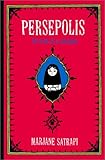
Summary: A young girl, Marji, from Tehran, Iraq, tells of her life and country's struggles during the 1980's as Iran entered the Islamic Revloution. Through the use of mininamlist comic book pictures, Marji leads the reader through government overthrow, totalitarianism, strict clothing restrictions, and the war between Iran and Iraq. Eventually the contry's politics become so tumultuous Marji is sent by her parents to live in Europe to escape the violence that blanketed her precious home country.

Personal Connection: The Islamic Revolution is a time period that seems to be left out of high school history. Persepolis is a humourous take on life, yet looks seriously at government, belief system, and oppression. Marji does an excellent job of showing the destruction of life that occured in Iran during the '80's. She describes her maid telling her family about a key that her poverty stricken son was given at school. The students were told that the key was their entrance ticket to heaven if they went to war for their country. It shocks me that during such a modern time, children were being sent to war. I know that it has happened throughout history and is still currently a practice in many countries around the world; but how could anyone strip the childhood inocence of a helpless young boy or girl? This question certainly lingered in my mind as I finished reading about the various other obstacles Marji and her people faced during the Islamic Revolution.

Evaluation/Analysis: At a lexile level of 380, Persepolis could be easily read by many elementary school students. However, because of its dark content and mature topics, this story would be best suited for mature middle school students or even high schoolers. The use of a comic book structure makes it appealing to your adiment non-readers. They learn a plethora of information by reading the book, yet feel a sense of accomplishment when they realized they read 150 pages in a short period of time.

In the classroom, Persepolis would be best used to allow students to gain an understanding about Iran, it's culture, and the events that occured during and after the Islamic Revolution. Students would be able to take the various attrocities that occured, record them in their journal, and use their newly learned information to help them determine if during the 1980's, Iran suffered a holocaust.

Historical Fiction: Sunrise Over Fallujah


Title: Sunrise Over Fallujah
Author: Walter Dean Myers
Publisher: Scholatic Press
Genre: Historical Fiction
Number of Pages: 290 pages
Discovery of Book: Charlotte Huck's Childhood Literature
Reading Level: Lexile Level: 780
Awards: Booklist, Horn Book starred, Kirkus Reviewed starred, Library Media Connection starred, Publishers Weekly starred, School Library Journal starred, Wilson's Junior High School, Wilson's Senior High School

Summary: Sunrise Over Fallujah is a powerful interpretation of the life of an 18 year old American solider in Iraq during the height of combat in 2003. Robin "Birdy" Perry felt that it was his civilian duty to join the United States Army after the terrorist attacks on September 11th, 2001. After completing basic training, Birdy entered Iraq not too sure of what to expect. Over time he learns that war is brutal, unfair, and filled to the brim with unpleasantries. He watches as his comrades die, his fellow country men kill innocent civilians, and the United States taints their name as a reputable nation.

Personal Connection: Any wartime book can be difficult to read. Sunrise Over Fallujah was no exception. Each page leaves the reader feeling a deep internal struggle about the value of war, freedom, and human life. At one point during the story, Birdy is visiting a woman in a particular village. The men and boys of her town had just boarded a van to follow the Ba'athists, or Nationalist Mob run by the Saddam party, to Baghdad to get their orders. As the van was pulling away, an American fighter plane zeroed in on the van, shot a missile, destroying the truck and the men in it on impact. The women and children proudly watching their husbands, fathers, and sons ride into town to report for duty soon found themselves in despair as there was nothing left of the van or men in it. This piece of text truly struck me, causing me to deeply question what was our true purpose for occupying Iraq?

Evaluation/Analysis: Sunrise Over Fallujah allows students from the fourth grade and beyond to become immersed in a story that could be currently affecting many of their families. This brilliant historical fiction invites students to understand what is happening in their current world as they wake up in their warm beds, go to school, and come home safely each night. Sunrise Over Fallujah would be a great way to supplement research about the War on Terror to help students determine if this time period is truly a holocaust. Students will also be able to form their own opinions about war, its importance, and its influence on society as a whole.

Biography: Mao Zedong: The Rebel Who Led A Revolution


Title: Mao Zeodong: The Rebel Who Led A Revolution
Author: Flora Geyer
Publisher: National Geographic
Genre: Biography
Number of Pages: 64 pages
Discovery of Book: Library Catalog
Reading Level:
Awards: Horn Book, School Library Journal

Summary: Mao Zeodong: The Rebel Who Led A Revolution is a powerful biography about the life of Mao Zeodong, a strong political leader who brought communism to China in 1949. This picture filled, information packed book leads readers through the early life of a rebellious child, turned political rebel, and eventual harsh leader of a crumbling nation. Mao Zeodong gives readers insights into this man's feelings, actions, and thoughts that many may have never known.

Personal Connection: Reading Mao Zeodong: The Rebel Who Led A Revolution allowed me to truly see the inner most thoughts of this powerful man. Many facts in this book shocked me, such as the fact that Mao married multiple times, leaving many of his wives to die at the hands of his political enemies. Furthermore, my knowledge of "The Great Leap Forward" was thoroughly enhanced. Mao wanted to modernize China so desperately he sacrificed the lives and health of his citizens. 38 million Chinese men, women, and children died during this time period, leaving Mao and his country in utter chaos.

Evaluation/Analysis: Often times Mao Zeodong's Great Leap Forward is not focused on in curriculum. Mao Zeodong: The Rebel Who Led A Revolution introduces middle schoolers to a man and a world that they may never have heard of before. The late emergent reader level of this biography allows seventh and eighth grade students to fully immerse themselves into China during a time of political uncertainty. This book helps students see a leader who had great intentions to improve his country, yet did it in a horrific way. Students would be able to gather research information about this wretched time period, leading them to question "Was "The Great Leap Forward" a holocaust?"

Biography: Anne Frank: The Young Writer Who Told The World Her Story


Title: Anne Frank: The Young Writer Who Told The World Her Story
Author: Ann Kramer
Publisher: National Geographic
Genre: Biography
Number of Pages: 64 pages
Discovery of Book: Library Catalog
Reading Level:
Awards: Horn Book, School Library Journal

Summary: The biography Anne Frank: The Young Writer Who Told The World Her Story is about the famous Jewish Holocaust journal keeper, Anne Frank. This book takes readers through the beginning of Anne's life, the rise of Hitler and Nazi Germany, The Frank's family struggle to stay hidden within a small room, to Anne's unfortunate and untimely death in Aushwitz concentration camp. Each page is intact with striking photographs of the time period and enticing information about the life and death of a powerful young girl.

Personal Connection: Having read The Diary of Anne Frank, I had some significant background about the life of this extraordinary girl. However, this biography about Anne Frank has allowed me to gain a deeper understanding about the trials and tribulations of a girl who was once living a content life. Reading about her discovery and deportation brought tears to the eyes, despite this book being non-fiction. Knowing that she was ripped apart from her family and friends, had her hair shaved off, and was left to wonder when she would be sent to the gas chambers was an intense, yet informative read.

Evaluation/Analysis: Anne Frank is an excellent book to introduce middle school students to this brave young journaler. The readability is about a 6th grade level, allowing most students to understand the powerful words on the page. This book would be a fantastic way to show students the true life of Anne before reading the play, Diary of Anne Frank. Students would be able to gain important background knowledge that could lead them to a better comprehension of the play and enable them to gain a deeper understanding of the events of the Holocaust. This book would certainly help to facilitate students ability to critically analyze if the Holocaust could truly be considered a holocaust.

Sunday, August 2, 2009

Non-Fiction: Rwanda: Fierce Clashes in Central Africa


Title: Rwanda: Fierce Clashes in Central Africa
Author: Text by Keith Greenberg/ Photos by John Issac
Publisher:Blackbirch Press
Genre: Non-Fiction
Number of Pages: 30 pages
Discovery of Book: Library Catalog
Reading Level: Lexile Level- 800
Awards: Kirkus Review, L.A. Recommended Foreign Language, Multicultural Review, School Library Journal

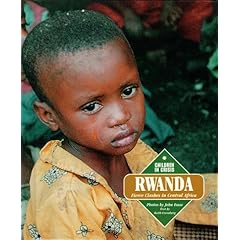
Summary: A United Nations photographer recaps his journey through the war torn country of Rwanda during the early '90's struggle between the Hutus and the Tutsis. He tells through his pictures and descriptions about the fighting, the filth, and the loss of lives that has occurred. John tells the story of a young boy names Innocence who is living in squalor after escaping to Zaire. He has lost his family to the violence in Rwanda and is fighting to survive; as are all of the refuges that have escaped the viciousness of the country of Rwanda.

Personal Connection: Rwanda has the ability to pull at any person's heart strings. The pictures of this book tell the story of the struggle that Rwandians have faced over the past few years. Seeing the pictures of the children, starving in their poverty stricken homes made from sticks and broken pieces of cloth is truly heart-wrenching. John's interaction with Innocence throughout his trip helps to make the book. When John describes how Innocence's family is ambushed in their home during the middle of the night, as he hid behind a kitchen stove, my want to help the children of Rwanda increased greatly.

Evaluation/Analysis: Rwanda would be a great visual introduction for middle school students to experience the trying time this impoverished country has faced in the relatively recent past. This would be an excellent read-aloud where the teacher could show the pictures of what happened between the Hutus and Tutsis, and what the aftermath looks like. Students would be able to describe the pictures that stand out the most to them, citing details from each that could help the student determine if the fighting between the Hutus and Tutsis was a holocaust.

Non-Fiction: Auschwitz


Title: Auschwitz
Author: Clive A. Lawton
Publisher: Candlewick Press
Genre: Non-Fiction
Number of Pages: 48 pages
Discovery of Book: Library Catalog
Reading Level:
Awards: Booklist, Bulletin of the center of Children's Books, Horn Book, Kirkus Review, School Library Journal starred, Voice of Youth Advocates

Summary: Auschwitz is a beautifully laid out book where each paid is covered in pictures that are accompanied with descriptions. The book shows the various parts of Auschwitz, the selection process for getting placed into work camps or gas chambers, and the liberation of the camps once the war was over. Aushwitz ends with the author showcasing how we know that the Holocaust and actions at Aushwitz actually existed and were not fabricated by Jews to gain sympathy.

Personal Connection: This book could easily have been told by pictures alone. Obviously the words help to explain the true events in each picture, but looking at them could cause tears to drip from your eyes. Each time I read about the Holocaust, the feeling of sadness rushes over me. After reading Auschwitz I felt much of the same. However, these feelings were magnified by the ending of the book, which describes why the Holocaust actually happened. It blows my mind that people can be so close-minded and naive to believe that the Holocaust is all a lie. The pictures, first hand accounts, and various legal documents prove time and time again that this wretched time period existed; and that human beings could truly be that inhuman to others of their kind.

Evaluation/Analysis: Auschwitz would be a perfect book for Middle Schooler's trying to decide if the Holocaust, was truly a holocaust, as per the definition. Students would be able to not only read about the events that occurred at Auschwitz, they would also be able to see pictures that accompany the multitude of explanations. The teacher could teach students how to do research with this story using primary sources. Another great teaching tool with this book would be to have students make collages of various time periods throughout history to help tell the story behind that specific event, just like Clive Lawton does in Auschwitz.

Non-Fiction: Japanese American Interment Camps


Title: Japanese American Internment Camps
Author: Gail Sakurai
Publisher: Children's Press
Genre: Non-Fiction
Number of Pages: 48 pages
Discovery of Book: Library Catalog
Reading Level: Lexile Level- 980
Awards: Library Media Connection

Summary: Japanese American Internment Camps is a non-fiction book that recaps the start of Japanese American prejudice by Americans with the bombing of Pearl Harbor. It then moves on to explain how Japanese Americans were moved to internment camps, despite their patriotism and innocence. The book finishes up by recapping how the Japanese were released back into society and how the United States began to pay retribution to surviving family members for the strife placed on Japanese American families during World War II.

Personal Connection: Whenever I read something about Japanese American Internment Camps it blows my mind that the United States committed this type of crime against its own citizens. You read about the travesty of the concentration camps in Europe around this time and think about the atrocities that occurred to human life. It amazes me that we did almost the same thing to our citizens, minus the torturous death. We took people from their homes and forced them to live in unpleasant conditions. We then released them back into society without providing them any assistance while being rude and prejudice against them.

Evaluation/Analysis: Japanese American Internment Camps is an excellent resource for Middle Schoolers who need truthful, non-bias information about a time in United States history that is rarely studied in school. This book would be great for a teacher to use to teach research strategies. Students could use this book to skim and scan, looking for important information. Furthermore, students could take notes on important facts that they find, helping to build their case as to whether or not the use of Japanese Internment Camps could be considered a holocaust.

Non-Fiction: First They Killed My Father


Title: First They Killed My Father
Author: Loung Ung
Publisher: Harper Perennial
Genre: Non-Fiction
Number of Pages: 238 pages
Discovery of Book: Library Catalog
Reading Level: Lexile Level-920
Awards: None

Summary: First They Killed My Father is a gripping memoir about a young girl, Ung, and her family's struggle to survive during Pol Pot's Khmer Rouge reign in Cambodia from 1975-1979. Ung lived in Phnom Pehn until her family was forced to flee. Ung's father was a government agent, which posed an eimminent threat to the family. Her father taught the family to act like illiterate peasants to help them survive this trying time. The family moved from town to town and eventually from work camp to work camp. Eventually Ung's father, mother, and two siblings are killed by the Khmer Rouge army. Ung describes her struggle as she escapes to Thailand and eventually to the United States, which ultimately allows us to hear this powerful story.

Personal Connection: Reading this memoir was heart wrenching. Each turn of the page warrants putting the book down because of the horror that is occurring, yet something tells you to keep reading. Seeing how terrible Pol Pot's army treated the Cambodians leaves a retching pit in your stomach. Ung describes how the family had to steal food to survive, yet when her brother is caught one day, he is brutally beaten, almost to death. As her family slowly falls apart, she finds herself and some of her siblings living under a tree, with nothing to eat, carrying but a few measly personal items. I wanted nothing more than to jump inside this story to help this physically and mentally beaten family, along with the thousand other Cambodians, escape to a new life.

Evaluation/Analysis: First They Killed My Father would be a powerful read for a Middle School student. Many of the events are difficult to swallow in terms of their brutality. This would be an excellent class read-aloud, allowing the teacher to do the reading and the students to do the listening. As the students listen, they should write down specific examples of brutality that might help peg the Pol Pot regime as a holocaust. The teacher could elicit discussion about the real-life pictures that are located in the center of the book, asking students how the incorporation of these photos may help them decide if the 1970's in Cambodia was truly a time worthy of being deemed a holocaust.

Contemporary Realistic Fiction: The Absolutely True Diary of a Part-Time Indian


Title: The Absolutely True Diary of a Part-Time Indian
Author: Sherman Alexie
Publisher: Little, Brown
Genre: Contemporary Realistic Fiction
Number of Pages: 229 pages
Discovery of Book: Graduate Level Class Syllabus
Reading Level:
Awards: American Indian Literature Award, National Book Award, Horn Book/Boston Globe Book Award for Fiction and Poetry

Summary: Junior, an up and coming cartoonist lives on the Spokane Indian Reservation with his parents and sister. His whole world is filled with drunk , casinos, and trying to survive depression. Junior's teacher believes that he has a lot to offer the world and suggests that he try going to school at an all white school located many miles from his home. Junior's parents agree and he soon begins living the life of an Indian who is seen as a traitor amongst his people and a complete outsider amongst his new classmates.

Personal Connection: This fantastic story shows the true life of American Indians seen from a Native American's point of view. This is one of the first books I have ever read that has such insight into this culture. Junior's cartoons and story telling ability makes the story hilarious, yet eye-opening. I think this book shows how hard life truly is for Native Americans. They are told to never betray their tribe, yet if they stay on the reservation their only options of life are to work at the casino, become a drunk, and live an impoverished life. I love how Junior shows that you can get out of the place that holds you down most as you creat a better life for yourself.

Evaluation/Analysis: The Absolutely True Diary of a Part-Time Indian is a phenomenial read for a middle school student. It contains both words and pictures, which can be very appealing to non-readers. In terms of in class work, this novel could be used to show the aftermath of the United States efforts to rid Native Americans from their land. Students could look deeply at this story using a historical lense, seeing the outcome of the Indian Removal Act. Looking at the life of Junior and his tribe members, students should be able to begin to determine if the removal of indians was a time period that could be deemed a holocaust.